Why Your Best Item Just Sold Twice (And How to Stop It)

Your best item sold twice. One buyer ordered it on Shopify, and another bought it on eBay an hour later. Now you have one item and two paid orders. An item sold twice is stressful, yet it follows a predictable pattern. This guide explains why it happens and how to stop it.
Why an Item Sold Twice in the First Place
Every sales channel keeps its own stock count. Shopify does not know what happened on eBay, and Etsy does not know what happened on Shopify. As a result, a listing stays live on every channel until you update it yourself. Your best seller makes this worse, because popular products attract buyers on several platforms at once.
The gap is usually small. A sale lands at noon, and you update your other listings at one. Nevertheless, that hour is enough for a second buyer to check out. Fast sellers feel this most, since high demand shrinks the window to minutes.
Three Common Reasons an Item Sold Twice
Manual updates cannot keep pace. Spreadsheets and memory work at low volume. However, they fail the moment sales speed up.
Listed quantity is higher than real stock. Sellers sometimes list the same units on every channel. Consequently, one unit can look available four times.
Returns and restocks go unrecorded. A return you forget to log throws every count off. Therefore, even careful sellers end up with numbers that drift. The guide on signs of poor inventory visibility shows how to spot that drift early.
What to Do the Moment It Happens
First, keep the order that came in first. Next, contact the other buyer right away. Apologize plainly, cancel the order, and refund in full. Additionally, offer a similar item or a discount code if you have one. Honest, fast communication protects your reviews far better than silence does. Sellers in r/ecommerce on Reddit regularly trade advice on handling this exact situation.
How to Stop It From Happening Again
Start by holding a few units back as a buffer. If you own five, list four. That spare unit covers a fast second sale while you catch up. Furthermore, update every channel the moment something sells. The Shopify Help Center and the Etsy Seller Handbook both stress keeping quantities accurate.
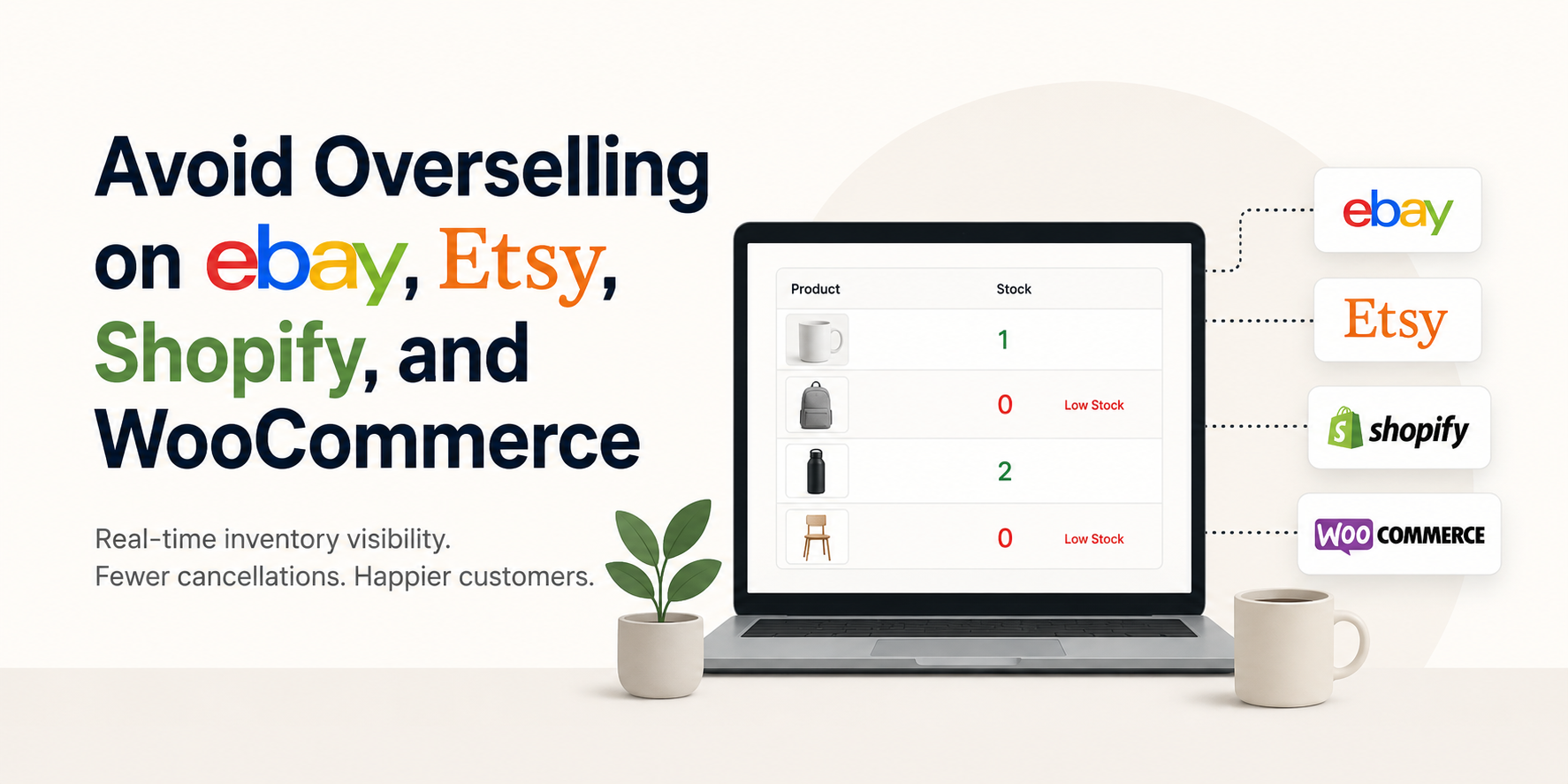
Finally, log returns and restocks the same day. Small habits like these add up quickly. The full routine appears in the article on inventory visibility best practices. Meanwhile, the walkthrough on how to avoid overselling across eBay, Etsy, Shopify, and WooCommerce covers each platform in detail.
Where Real Time Visibility Fits In
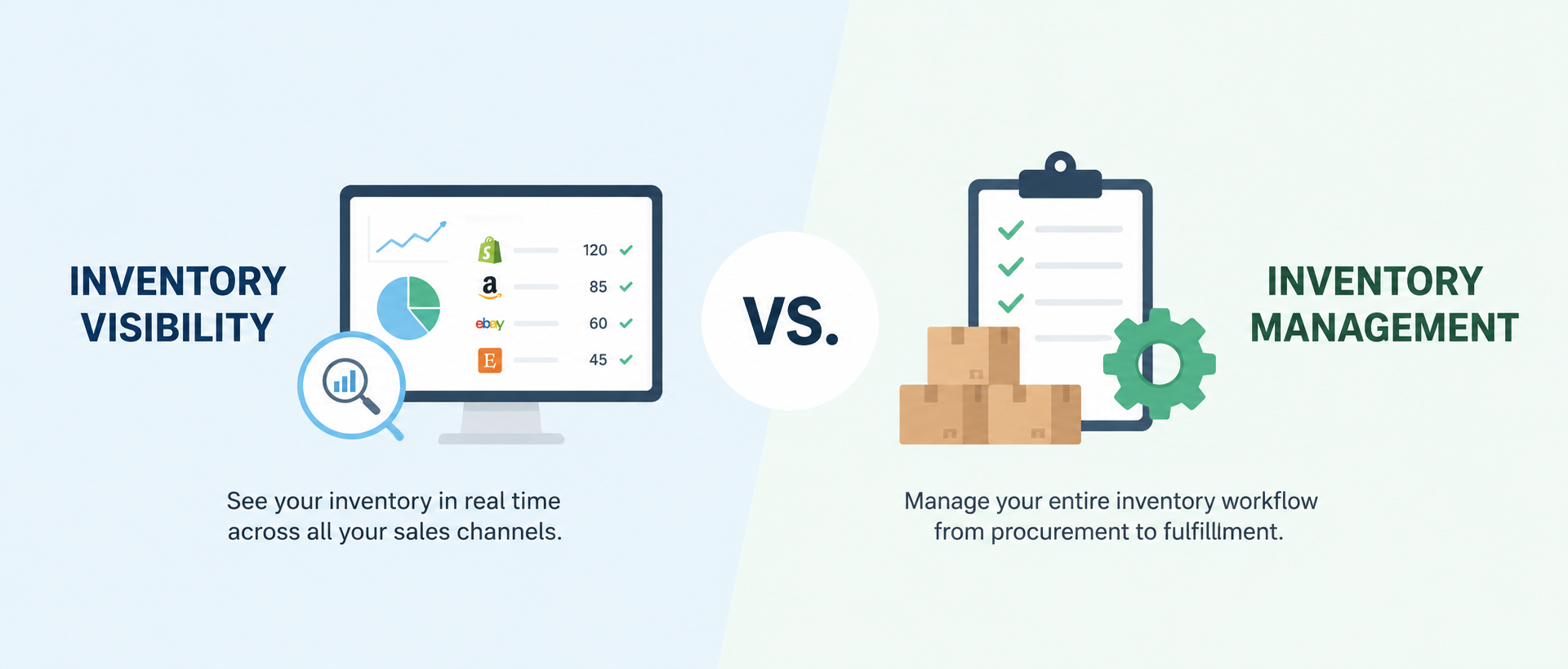
Manual habits help, yet they still depend on you noticing a sale quickly. A visibility tool closes that gap. It shows live stock across your channels in one dashboard and alerts you when an item runs low or hits zero. Then you act before a second buyer arrives. The article on what inventory visibility software actually does explains how this differs from tools that sync automatically.
SyncLink66 works this way across Shopify, Etsy, eBay, and WooCommerce. It connects through a simple sign in and never rewrites your listings, so every change stays in your hands. On the free plan, the dashboard refreshes every 30 minutes. On the Pro plan at $19.99 per month, tracking runs in real time with immediate alerts. Note that a fast double sale can still slip through a 30 minute refresh, so busy sellers benefit most from Pro. You can install it from the Shopify App Store or review the pricing page.
Some sellers prefer tools that update stock automatically. In that case, the comparisons of SyncLink66 vs Trunk and SyncLink66 vs Sumtracker show the tradeoffs clearly.
The Bottom Line
An item sold twice is frustrating, but it is rarely random. Separate stock counts and slow updates cause almost every case. Therefore, a small buffer, quick updates, and early alerts remove most of the risk. For a broader plan, read the guide on how to improve inventory visibility.