What Is Inventory Visibility Software?
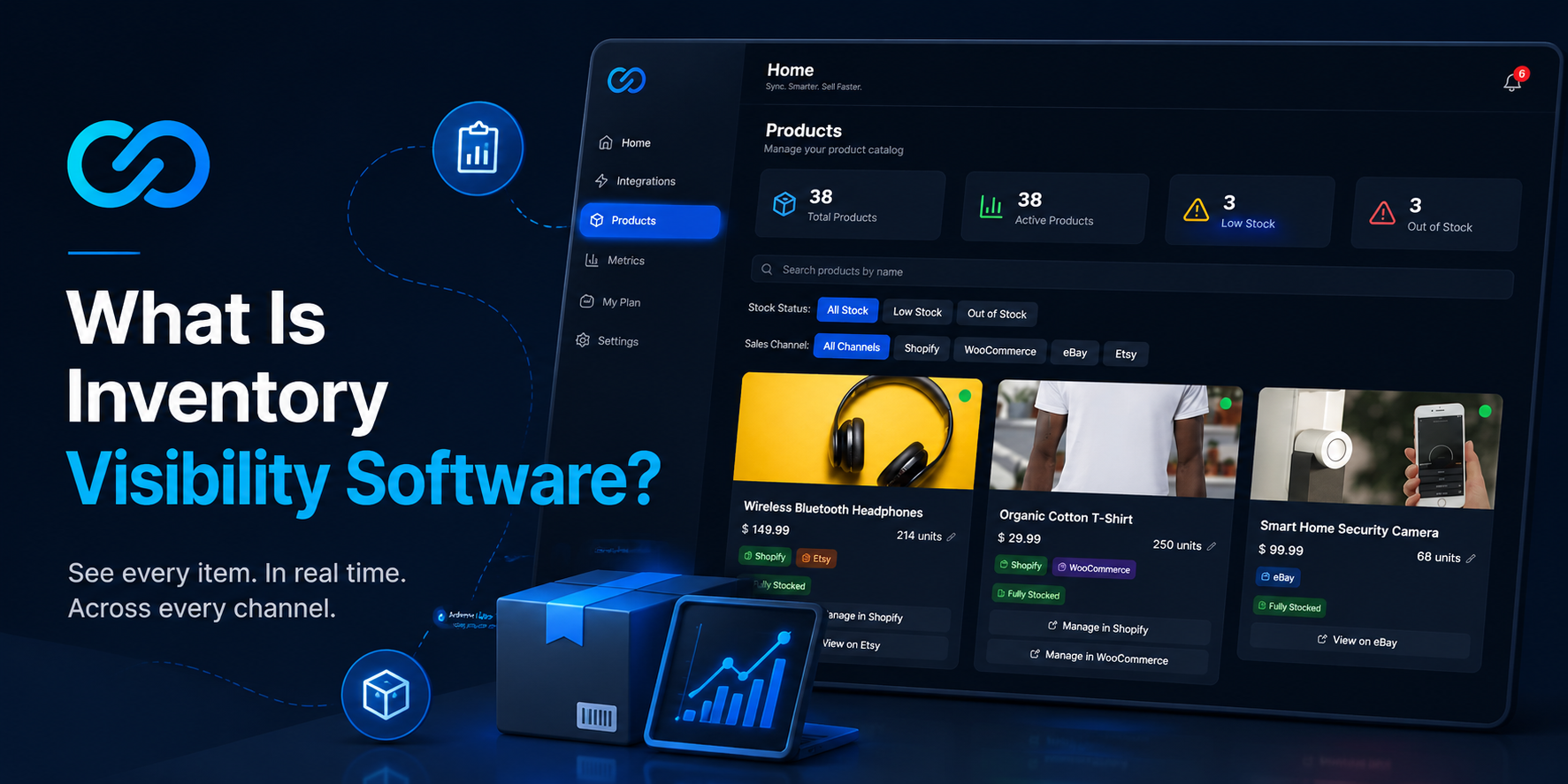
Inventory visibility software is a tool that shows you exactly what stock you have across every platform you sell on, in real time. If you sell on more than one channel, you have probably felt the problem it solves. A sale happens somewhere and you find out too late. By then, the same item has sold somewhere else. That is an oversell, and inventory visibility software exists to stop it before it happens.
What It Does and Why It Matters
At its core, inventory visibility software connects your sales channels into one dashboard. Instead of logging into eBay, then Etsy, then Shopify, then WooCommerce separately, you see everything in one place. Stock levels update as sales happen. Alerts fire when a product runs low or sells out entirely. As a result, you always know where your inventory stands without switching between tabs or relying on memory.
Crucially, good inventory visibility software does not make changes to your listings automatically. Instead, it shows you what changed and lets you decide what to do next. That distinction matters. Automated tools that rewrite your stock numbers in the background depend on stable API connections and clean data. When something breaks, silent errors reach your live listings before you notice. Visibility software eliminates that risk by keeping you in control of every update.
In addition, most inventory visibility tools send low stock and out of stock alerts. These give you time to act before a problem occurs rather than after. For sellers on platforms like eBay, that is especially important. Canceled orders count directly against your seller standards rating. Too many defects and you risk losing Top Rated Seller status or dropping in search rankings. Visibility software helps you avoid that entirely.
How Inventory Visibility Software Differs from Inventory Management
These two categories often get confused. However, they solve different problems for different types of sellers. Understanding the difference helps you pick the right tool rather than paying for features you will never use.
Inventory management software handles the full operational layer of a product business. That includes purchase orders, vendor management, warehouse routing, barcode scanning, demand forecasting, and automated stock updates across channels. Shopify’s inventory documentation gives a useful overview of what full inventory management involves. Tools like Cin7, Linnworks, and Sellbrite sit in this category. They suit businesses with warehouses, fulfillment teams, and high order volumes that justify the cost and setup time.
Inventory visibility software, on the other hand, focuses purely on what you can see. It does not automate operational workflows. Instead, it gives you a clear, real-time picture of your stock across every channel so you can act fast when something changes. For a deeper look at how these two approaches compare, our post on inventory visibility vs inventory management covers the full breakdown.
Who Needs Inventory Visibility Software?

Inventory visibility software suits small to mid-size sellers who list the same products across multiple online platforms. If you sell on two or more of eBay, Etsy, Shopify, and WooCommerce, you face the core problem visibility software solves. You have one pool of stock and multiple storefronts pulling from it. Without a tool showing you the full picture in real time, overselling becomes a matter of when, not if.
Furthermore, visibility software suits sellers who want to stay in control of their own listings. Some sellers prefer full automation. Others, however, would rather get an alert and make the update themselves. That is especially true for sellers who have experienced automation errors before. A sync tool that silently overwrites the wrong listing can cause more damage than a manual update that takes thirty seconds.
By contrast, full inventory management software suits larger businesses with warehouses, staff, and complex fulfillment needs. If that describes your operation, a visibility-only tool will feel too limited. However, if you run a lean multichannel operation from one location, visibility software gives you exactly what you need without the overhead of an enterprise platform.
Inventory visibility software, on the other hand, focuses purely on what you can see rather than automating workflows behind your back. That distinction is exactly why having a dedicated best multi channel stock tracker for Pokemon and TCG sellers or custom jewelry makers is so critical. These unique categories rely on hyper-specific variations and custom titles across platforms like eBay and Shopify, meaning one single automated sync script glitching in the background can permanently destroy your custom listing formatting or accidentally overwrite a rare item.
How SyncLink66 Monitors Your Stock in Real Time
SyncLink66 is inventory visibility software built specifically for small sellers on eBay, Etsy, Shopify, and WooCommerce. It connects all your stores into one real-time dashboard. The moment stock moves on any channel, you see it. Instant alerts notify you when products hit low stock or out of stock thresholds. You then decide what to update. SyncLink66 never touches your listings automatically.
Setup connects through OAuth in minutes, all you have to do is sign into your stores to connect. No warehouse configuration and no complex onboarding needed. SyncLink66 works best when your products share consistent SKUs across platforms, so standardize those before connecting if your listings use different identifiers on each channel. The free plan covers two stores and 25 products. The Pro plan is $19.99 per month for unlimited stores and products with real-time alerts. Full details are on the pricing page.
If you are also evaluating specific tools, our comparisons of SyncLink66 vs Cin7, SyncLink66 vs Linnworks, SyncLink66 vs Shopventory, and SyncLink66 vs Sellbrite show how a visibility-first tool stacks up against full management platforms.
The Bottom Line
Inventory visibility software solves a specific problem: knowing what you have, across every channel, right now. It is not a replacement for full inventory management. Rather, it is the right tool for sellers who need clarity over their stock without paying for features they do not need. If you sell on multiple platforms and want to stop overselling without a six-month implementation, start for free at synclink66.com.