Inventory Visibility vs Inventory Management
If you sell on more than one platform, you have probably heard both terms. Inventory visibility vs management come up constantly in ecommerce. However, most sellers use them interchangeably, and that is a mistake. They describe two very different things. Understanding the difference helps you choose the right tool for where your business actually is right now.
What Is Inventory Management?
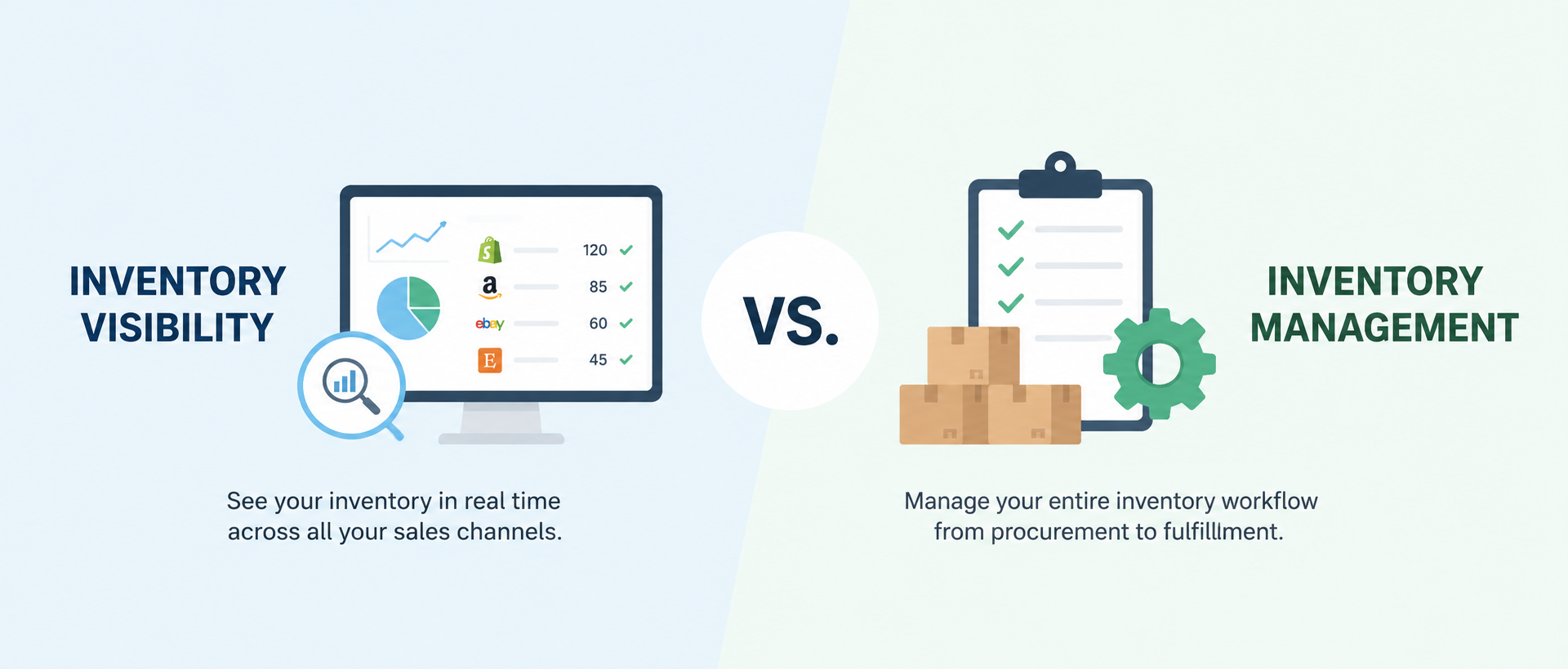
Inventory management is the full system of controlling stock across your business. It includes purchase orders, vendor relationships, warehouse locations, reorder triggers, barcode scanning, and automated stock updates across sales channels. In short, it is the entire operational backbone of how products move in and out of your business.
Inventory management tools automate as much of that process as possible. When a sale happens on one channel, the software automatically rewrites your stock numbers everywhere else. It also generates purchase orders when stock runs low and routes orders to the right warehouse. Consequently, these platforms are powerful. However, they are also complex, expensive, and built for businesses with real operational infrastructure behind them. Shopify’s own inventory documentation gives a good overview of what full inventory management involves at the platform level.
Tools like Linnworks, Shopventory, and Sellbrite sit in this category. They are the right call when you have a warehouse, a team, and order volumes that make full automation worth the setup cost and monthly fee. If you want to see how they compare to a visibility-first approach, our breakdowns of SyncLink66 vs Linnworks, SyncLink66 vs Shopventory, and SyncLink66 vs Sellbrite go into detail on each one.
What Is Inventory Visibility?
Inventory visibility is simpler and more focused. It means knowing exactly what you have in stock, across every platform you sell on, at any given moment. Instead of automating what happens next, it shows you what is happening right now and alerts you the moment something changes.
A visibility tool does not rewrite your listings. It does not place purchase orders. It does not route shipments. Instead, it gives you a single real-time view of your stock across all your stores. As a result, the moment something sells on eBay, you see it. The moment a product hits low stock on Etsy, you get an alert. You then decide what to do next. The tool never makes that decision for you.
That distinction matters more than it sounds. Automated inventory management tools depend on stable API connections, clean SKU matching, and systems that never glitch. When something breaks — and it does break — the software can silently overwrite your live listings with wrong numbers before you notice. On platforms like eBay, that leads directly to canceled orders, which count against your seller standards rating. Visibility tools eliminate that risk entirely. You stay in control of every update.
Inventory Visibility vs Management: Which Do You Actually Need?
The honest answer depends on your business size and complexity. Here is a simple way to think about it.
You need inventory management if you run a warehouse, process hundreds of orders per day across many channels, employ a fulfillment team, and need automated purchase orders and shipping workflows. In that case, the complexity and cost of a full management platform is justified. The automation pays for itself at that scale.
You need inventory visibility if you are a small seller on two to four platforms — eBay, Etsy, Shopify, WooCommerce — managing your own stock and trying to stop overselling. In that case, you do not need purchase orders or warehouse routing. You need to know the moment something sells so you can update your other listings before someone else buys the same item. Visibility solves that problem directly, without the overhead of a full management platform.
Furthermore, most small sellers reach for inventory management tools simply because that is what they find first. However, they end up paying for features they never use and spending weeks on setup they never needed. A visibility tool, on the other hand, gets you live in minutes and costs a fraction of the price.
Why SyncLink66 Is a Visibility Tool — Intentionally
SyncLink66 is built specifically as an inventory visibility platform. That is a deliberate choice, not a limitation. It connects your eBay, Etsy, Shopify, and WooCommerce stores into one real-time dashboard. The moment stock moves anywhere, you see it and get an alert. You then decide what to update. SyncLink66 never touches your listings automatically.
As a result, there are no silent errors, no automation glitches overwriting live listings, and no six-month implementation project to get started. Setup takes minutes through OAuth. The free plan covers two stores and 25 products. The Pro plan is $19.99 per month for unlimited stores and products with instant alerts. You can see the full breakdown on the pricing page.
If you are also comparing specific tools side by side, our breakdown of SyncLink66 vs Trunk covers another popular option in this space.
Inventory Visibility vs Management: The Bottom Line
Inventory visibility vs management is not a question of which is better. It is a question of which fits your business right now. Full management platforms are powerful, but they are built for scale. Visibility tools, however, are built for clarity. If you are a small multichannel seller who wants to know exactly what is happening across your stores without handing control to an automated system, start with visibility. You can always scale up later. Start for free at synclink66.com.