What Is Real-Time Inventory?
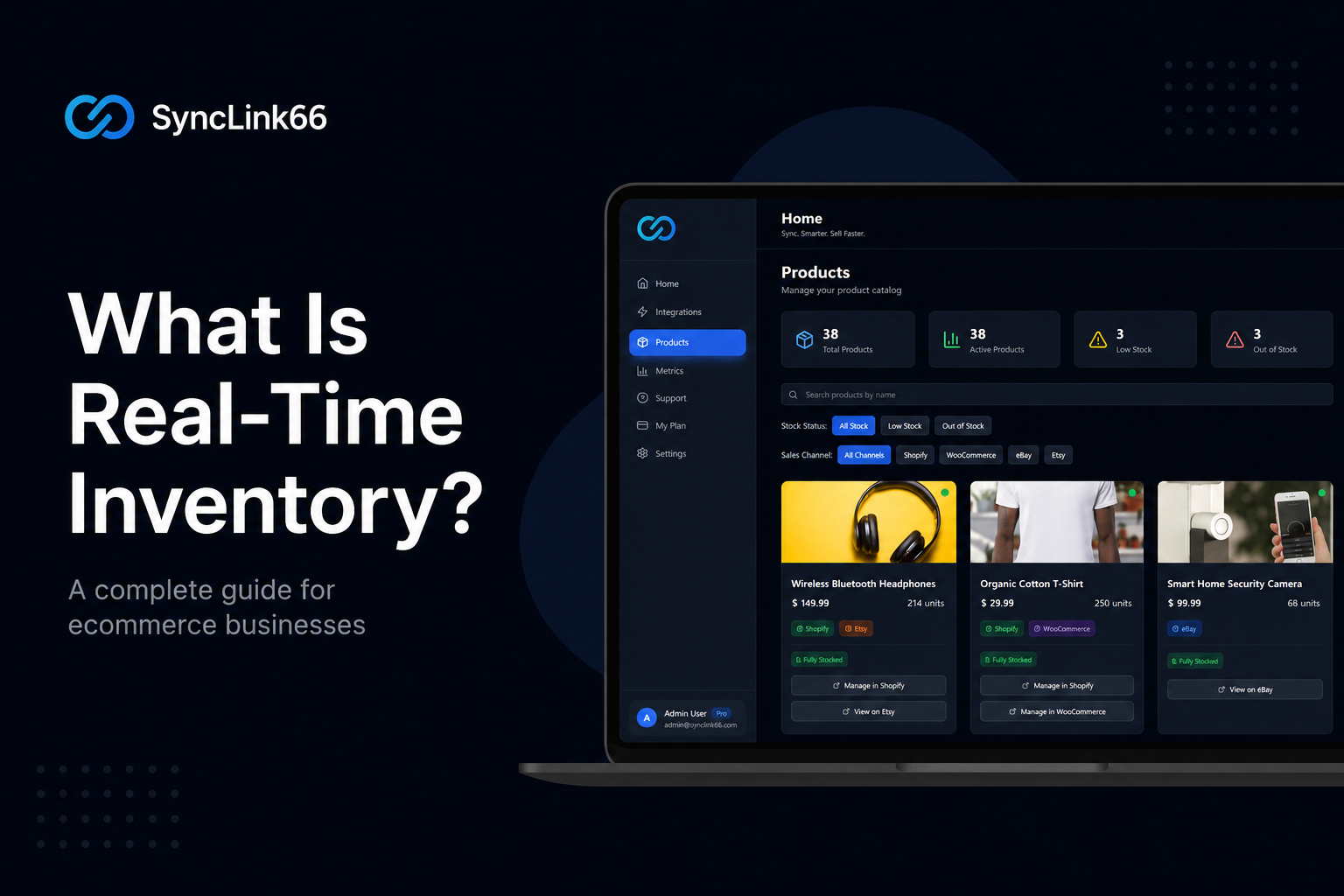
Real-time inventory means your stock counts update the instant something changes, not minutes or hours later. If you sell on more than one platform, that distinction matters a great deal. A sale happens on one channel and your other listings reflect it immediately. No delay, no manual refresh, no waiting period where the wrong number sits on a live listing.
How Real-Time Inventory Works
At a basic level, real-time inventory connects your sales channels so that a change on one platform reflects everywhere else almost instantly. When a customer buys a product on eBay, a real-time system registers that sale right away. As a result, your Etsy, Shopify, and WooCommerce listings show the updated count within seconds rather than the next time you happen to check manually.
This is different from periodic syncing, which many older tools still rely on. A periodic system might refresh stock counts every thirty minutes or once an hour. Furthermore, that gap creates a window where your listings are technically wrong. If two sales happen in that window across different platforms, you end up oversold without ever knowing until a customer reaches out.
On eBay in particular, that gap carries real consequences. Canceled orders count against your seller standards rating, and too many defects can cost you Top Rated Seller status or visibility in search results. Real-time inventory closes that gap almost entirely, which is why it has become the standard sellers look for rather than a nice extra.
Comparing Instant Updates to Periodic Syncing
The difference between real-time and periodic updates sounds small, but in practice it changes outcomes significantly. With periodic updates, you are always working with slightly outdated information. Most of the time that is harmless. However, on fast-moving products or during high-traffic periods, even a thirty-minute delay is long enough for an oversell to happen.
Real-time systems remove that risk almost entirely. Instead of waiting for the next scheduled refresh, your dashboard reflects what is actually happening right now. Consequently, you make decisions based on current information rather than a snapshot from twenty minutes ago. That difference becomes especially important once you are selling across three or four platforms at once, where the odds of two near-simultaneous sales increase with every channel you add.
It is also worth noting that real-time inventory is not the same thing as automated inventory management. A real-time visibility tool shows you what changed the instant it happens, but it does not necessarily rewrite your listings for you. Some tools do both. Others, deliberately, only handle the visibility side and leave the final update in your hands. Our post on how visibility differs from full inventory management covers that distinction in more depth.
Why Real-Time Inventory Matters for Multichannel Sellers
For a seller on a single platform, real-time updates are nice but rarely critical. For a seller on two or more platforms, they become essential. The more channels you add, the more opportunities exist for the same item to sell twice before anyone notices. Real-time visibility is what keeps that from happening as your business scales.
Beyond preventing oversells, real-time data also supports faster, better decisions. You see exactly which products are moving and on which channels, which means restocking decisions reflect what is actually happening rather than guesswork. Our post on the benefits of inventory visibility for small sellers goes deeper into how this plays out day to day. For a broader look at why this matters so much for growing multichannel operations, our post on why getting real-time stock awareness right matters is worth reading alongside this one.
How SyncLink66 Keeps Your Stock Counts Current
SyncLink66 gives small sellers on eBay, Etsy, Shopify, and WooCommerce a genuinely real-time dashboard. The moment a sale happens on any connected store, you see it. Instant alerts notify you when products hit low stock or sell out entirely. Critically, SyncLink66 never rewrites your listings automatically. It surfaces the change and puts the decision in your hands.
Setup connects through OAuth in minutes with no warehouse configuration needed. The free plan covers two stores and 25 products, updating every thirty minutes. The Pro plan upgrades you to true real-time updates for $19.99 per month with unlimited stores and products. Full details are on the pricing page. For more on what a visibility tool actually does behind the scenes, our post on what inventory visibility software actually does covers it in full. If you want the broader concept explained from the ground up, our post on what stock visibility means for small sellers is the right place to start.
The Bottom Line
Real-time inventory is the difference between knowing what is happening in your store right now and working off information that is already out of date. For multichannel sellers, that difference prevents oversells, protects your reputation, and saves you from constant manual checking. Start for free at synclink66.com and see what real-time visibility looks like for your stores.