Inventory Visibility vs Inventory Accuracy
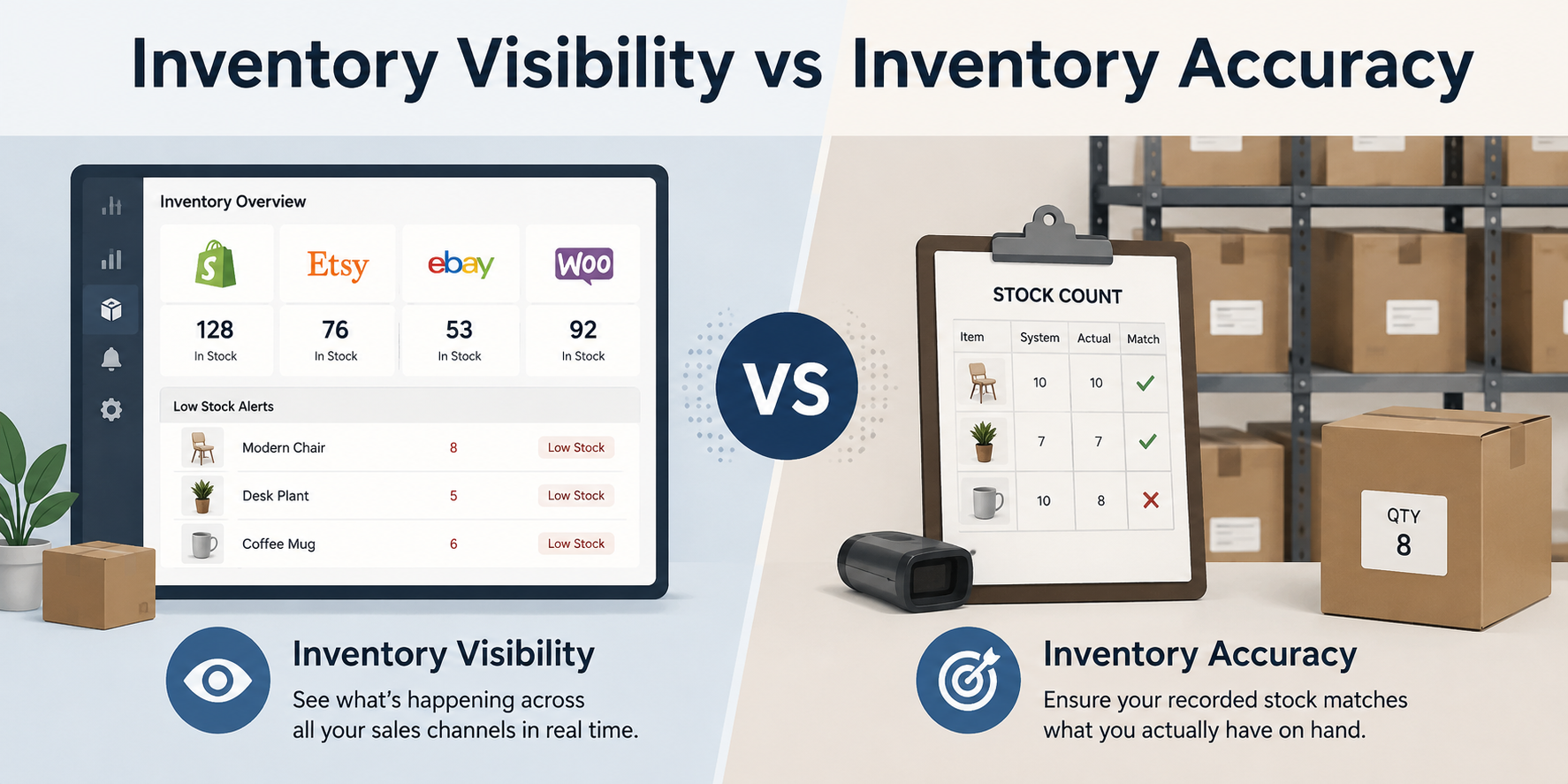
Inventory visibility vs inventory accuracy is a distinction that trips up a lot of multichannel sellers. The two terms sound similar and are often used interchangeably. However, they describe different things, and understanding that difference helps you figure out exactly what your business needs. This post breaks down what each one means, how they relate, and why both matter for small sellers on platforms like Shopify, Etsy, eBay, and WooCommerce.
What Is Inventory Visibility?
Inventory visibility is your ability to see what you have in stock across every sales channel in real time. It means knowing the moment a sale happens on any platform, seeing which products are running low, and getting an alert before a problem turns into a canceled order. For a full breakdown of the concept, our post on what inventory visibility means for small sellers covers it in detail.
Visibility is about awareness. It answers the question: what is happening with my inventory right now, across all my stores, at this exact moment?
What Is Inventory Accuracy?
Inventory accuracy is a measure of how closely your recorded stock levels match what you actually have on hand. If your system says you have 10 units of a product but you physically only have 7, your inventory accuracy is off. That gap causes problems. You might oversell, misprice, or make restocking decisions based on numbers that do not reflect reality. eBay, for example, tracks seller performance closely and cancellations caused by inaccurate stock count directly against your defect rate.
Accuracy is about correctness. It answers the question: do my stock numbers actually reflect what I have?
Inventory Visibility vs Inventory Accuracy: How They Differ
The core difference between inventory visibility vs inventory accuracy is that visibility is about speed and awareness, while accuracy is about correctness and reliability. You can have high visibility but poor accuracy. For example, your dashboard might show you real-time stock counts across every channel, but if those numbers were entered incorrectly to begin with, you are seeing the wrong information very quickly.
On the other hand, you can have high accuracy but poor visibility. Your stock records might be perfectly correct, but if you can only check them by logging into each platform separately, you will still miss problems. Accuracy without visibility means you have the right data but no fast way to act on it.
For small multichannel sellers, both matter. Visibility gets you the alerts you need to act fast. Accuracy ensures those alerts are based on numbers you can trust. Together they form the foundation of a reliable inventory operation.
Why Both Matter for Multichannel Sellers
Selling on multiple platforms creates risk on both fronts. Each platform holds its own stock count independently. When a sale happens on one channel, every other channel still shows the old number until you update it. That gap is where overselling happens.
Visibility solves the speed problem. It shows you that gap the moment it opens. Additionally, it alerts you so you can close it before anyone else buys something you no longer have. Our post on why real-time stock awareness matters goes deeper into the consequences of missing that window.
Accuracy solves the trust problem. It ensures the numbers your visibility tool is showing you are worth acting on. If your stock counts are consistently off, even the best real-time dashboard becomes unreliable. Consequently, maintaining accurate records from the start is what makes visibility genuinely useful.
How Visibility Tools Support Accuracy
A good inventory visibility tool supports accuracy rather than undermining it. Tools that automatically rewrite your stock numbers across platforms can introduce errors. If an automated sync misfires due to an API issue or a mismatched SKU, it can push incorrect numbers to your live listings without warning. That is a visibility problem and an accuracy problem at the same time.
By contrast, an alert-driven visibility tool shows you what is happening and lets you make the update yourself. That approach keeps you in control of both speed and correctness. You see the change in real time and confirm the right number before anything on your listings changes. For more on how visibility software works in practice, our post on what inventory visibility software actually does explains the key features to look for.
How SyncLink66 Addresses Both
SyncLink66 is built around visibility first. One real-time dashboard shows stock levels across Shopify, Etsy, eBay, and WooCommerce. Instant alerts fire the moment something sells or runs low, and each alert links directly to the listing so you can update it immediately.
Because SyncLink66 never automatically rewrites your stock numbers, accuracy stays in your hands. You confirm every update before it goes live. That means your listings only reflect numbers you have personally verified, which keeps both visibility and accuracy working together rather than against each other. For a full look at what you gain from that approach, our post on the benefits of inventory visibility for multichannel sellers covers the practical advantages in detail.
The Bottom Line
Inventory visibility vs inventory accuracy are not competing priorities. They work best together. Visibility gives you the speed to catch problems fast. Accuracy gives you the confidence that the numbers you are acting on are correct. For small multichannel sellers, both are essential, and the right tool supports both without taking control away from you.
Start for free at synclink66.com and see your inventory clearly across every channel today.