What Is Inventory Visibility?
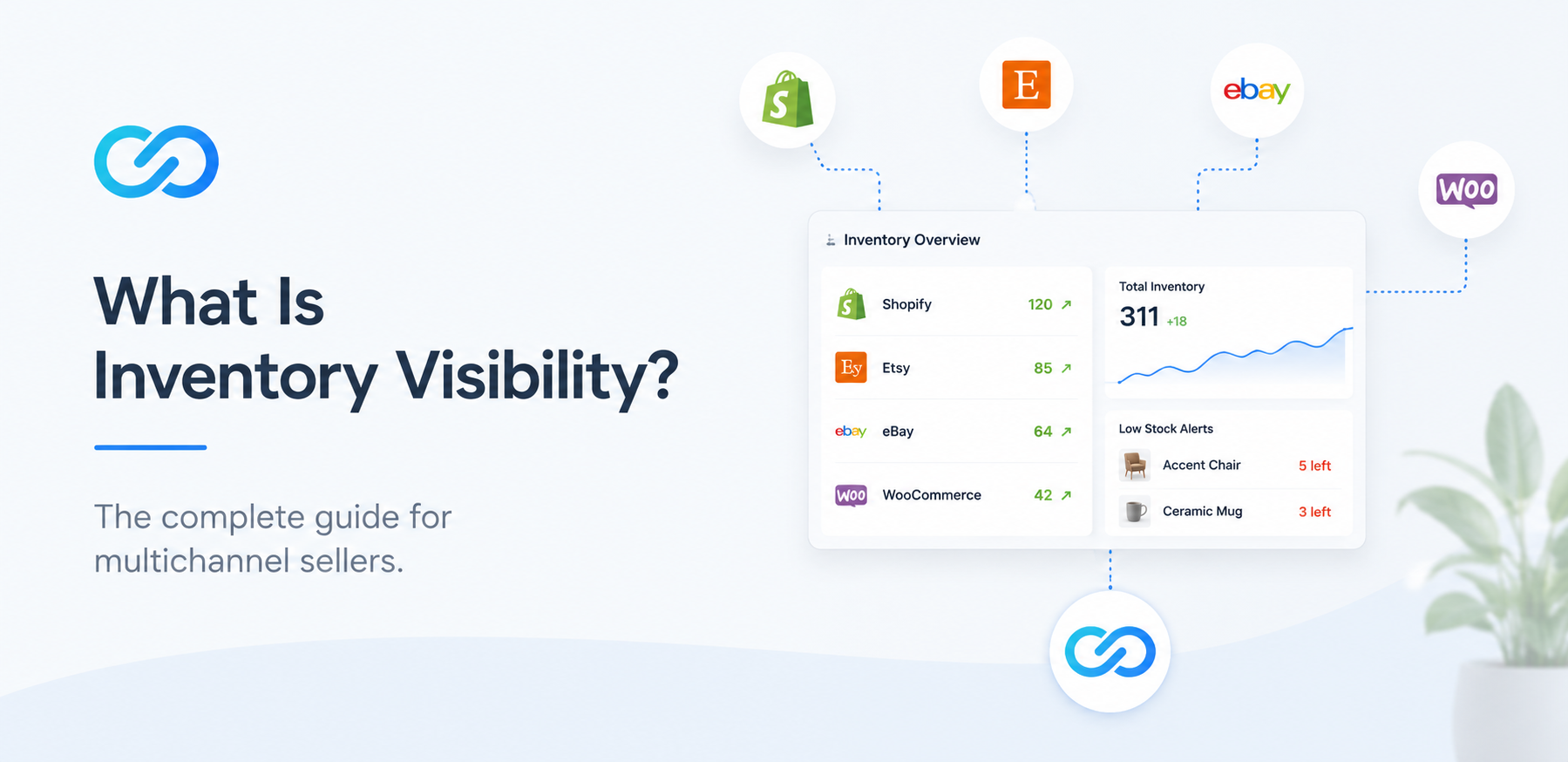
What is inventory visibility? If you sell on more than one platform, it is one of the most important concepts to understand. In short, inventory visibility means knowing exactly what stock you have, across every store you sell on, at any given moment. However, it is more than just a stock count. It is the ability to see what is happening across all your sales channels in real time and to act on that information before it becomes a problem.
Why Real-Time Stock Monitoring Matters for Multichannel Sellers
Inventory visibility is the ability to monitor your stock levels across every platform you sell on, in real time. It answers two simple questions at any moment: what do you have, and where is it? For a small multichannel seller, that means seeing your eBay, Etsy, Shopify, and WooCommerce stock all in one place, updating as sales happen.
Without visibility, you rely on memory or manual checks. As a result, you find out about a stock problem after it has already become a canceled order. On platforms like eBay, that matters more than most sellers realize. Canceled orders count directly against your seller standards rating. Too many defects and you lose Top Rated Seller status, drop in search rankings, or face account restrictions. Visibility prevents that from happening in the first place.
Furthermore, the problem gets worse as you add platforms. One store is manageable. Two starts to get complicated. Three or four and you are constantly switching tabs, checking numbers manually, and hoping nothing sold while you were not looking. Real-time inventory visibility removes that guesswork entirely.
What Is Inventory Visibility vs Inventory Management?
These two terms are often used interchangeably. However, they describe very different things. Understanding the distinction helps you choose the right tool for your business.
Inventory management is the full operational system: purchase orders, warehouse routing, barcode scanning, automated stock updates, and vendor management. It is built for high-volume sellers with warehouses and fulfillment teams. Shopify’s inventory documentation gives a useful overview of what full inventory management involves at the platform level.
Inventory visibility, on the other hand, is focused and lightweight. It does not automate changes to your listings. Instead, it shows you what is happening across your stores in real time and alerts you when you need to act. You stay in control of every update. Consequently, there are no silent errors, no automation glitches, and no system quietly rewriting your stock numbers while you are not watching.
For a deeper look at how these two approaches compare, our post on inventory visibility vs inventory management covers the full breakdown.
What Is Inventory Visibility in Practice for Small Sellers?
For a small multichannel seller, inventory visibility looks like this. You have one mug listed on eBay, Etsy, and your Shopify store. It sells on Etsy at noon. With real-time visibility, you see that sale the moment it happens. You get an alert. You then go and update the eBay and Shopify listings yourself before anyone else buys the same item.
Without visibility, you might not notice until an hour later. By then, the same mug may have sold again on eBay. Now you owe two people one mug, and you only have one. That is an oversell and it is entirely avoidable with the right tool.
In addition, good inventory visibility tools send low stock and out of stock alerts. So even before something sells out entirely, you know when a product is running low. That gives you time to restock, adjust listings, or remove items from channels before a problem occurs.
How SyncLink66 Monitors Your Stock in Real Time
SyncLink66 is built specifically as an inventory visibility platform for small sellers on eBay, Etsy, Shopify, and WooCommerce. It connects all your stores into one real-time dashboard. The moment stock moves on any channel, you see it. You also get instant alerts when products hit low stock or out of stock thresholds.
Importantly, SyncLink66 does not touch your listings automatically. It shows you what is happening and puts the decision in your hands. That means no automation errors, no silent overwrites, and no surprises. You remain in full control of your catalog at all times.
Setup takes minutes through OAuth. There is no warehouse configuration and no SKU mapping project, though SyncLink66 works best when your products use consistent SKUs across platforms. The free plan covers two stores and 25 products. The Pro plan is $19.99 per month for unlimited stores and products with instant alerts. Full details are on the pricing page.
If you are also evaluating other tools, our comparisons of SyncLink66 vs Trunk, SyncLink66 vs Sellbrite, and SyncLink66 vs Linnworks show how visibility-first tools stack up against full management platforms.
The Bottom Line
So, what is inventory visibility? It is the foundation of selling on multiple platforms without losing control. It is knowing what you have, where it is, and what just changed in real time, across every store you sell on. For small multichannel sellers, it is not a luxury. It is the difference between a smooth operation and a constant scramble. Start for free at synclink66.com.