Best Inventory Sync Tools for Etsy Sellers in 2026
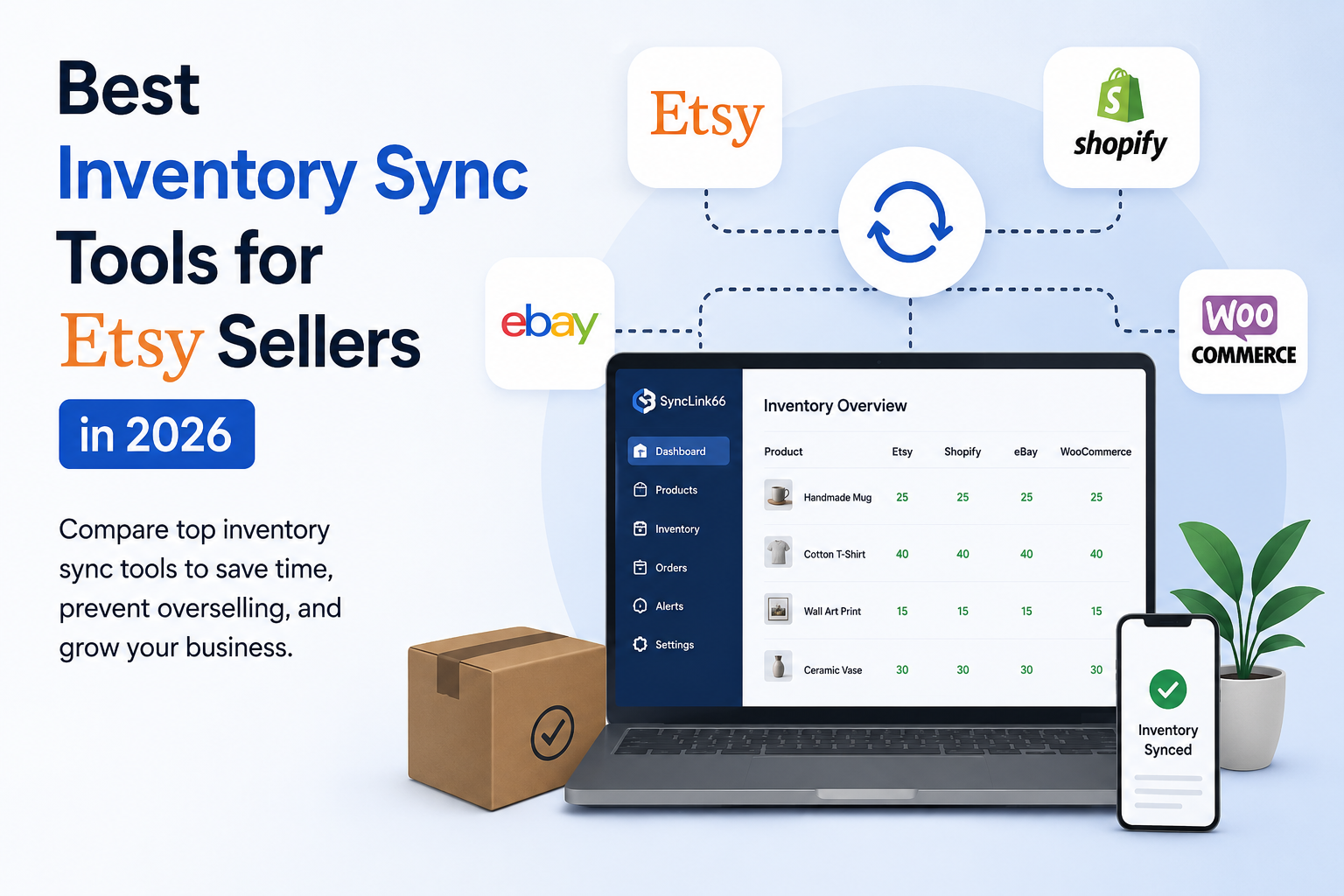
If you sell on Etsy, Shopify, eBay, or WooCommerce, managing inventory across multiple platforms quickly becomes one of the hardest parts of running your business. What starts as a simple setup turns into constant manual updates, stock mismatches, and overselling issues that can hurt your reputation and cost you sales.
For many sellers, the problem shows up at the worst possible time. You sell a product on Shopify, forget to update Etsy, and by the time you notice, you have already sold the last unit twice. Now you are canceling orders, issuing refunds, and dealing with unhappy customers.
This is exactly why inventory sync tools exist. They automatically update stock across all your connected platforms so every sale reduces inventory everywhere instantly. No spreadsheets, no manual updates, no guessing.
Why Inventory Sync Matters More Than Ever in 2026
Selling on a single platform is simple because inventory is controlled in one place. But once you expand to Etsy, Shopify, Amazon, or eBay, every platform becomes its own separate system that does not communicate with the others.
Without automation, you are responsible for keeping everything aligned manually. As your sales increase, this quickly becomes impossible to manage.
Even a small delay in updating inventory can lead to overselling, which creates refunds, support tickets, and negative reviews that can hurt your store long-term. That is why real-time inventory sync tools have become essential for modern eCommerce sellers.
What Makes a Good Inventory Sync Tool?
Not all tools solve the problem the same way. Some update inventory on scheduled intervals, while others sync in real time as soon as a sale happens.
The most important factor is sync speed. Real-time syncing ensures your inventory is always accurate across Etsy, Shopify, eBay, and WooCommerce without delays.
Integration quality also matters, especially for Etsy, which requires proper API access and stable integrations. Weak integrations often lead to inaccurate stock updates.
Ease of setup is another key factor. The best tools use OAuth, meaning you can connect your store in minutes without technical configuration or API keys.
Finally, pricing matters. Many inventory tools are built for enterprise businesses, making them expensive and unnecessarily complex for small Etsy sellers.
Best Inventory Sync Tools for Etsy Sellers in 2026
Below are the most commonly used inventory sync tools for Etsy sellers who also sell on Shopify, eBay, or WooCommerce. Each tool fits a different type of seller depending on budget, complexity, and scale.
SyncLink66 — Best for Real-Time Multichannel Inventory Sync
SyncLink66 is built specifically for Etsy, Shopify, eBay, and WooCommerce sellers who want real-time inventory syncing without enterprise complexity.
Unlike tools that sync on schedules, SyncLink66 updates inventory instantly across all connected platforms the moment a sale happens. This helps prevent overselling and keeps stock accurate at all times.
It also includes low stock alerts, out-of-stock notifications, and a centralized dashboard where sellers can track inventory, sales, and performance in one place. Setup is simple using OAuth authentication, allowing sellers to connect their stores in minutes without technical knowledge.
Pricing starts with a free plan and goes up to $19.99 per month for Pro, which includes unlimited stores and real-time sync. See the full breakdown on the pricing page.
Sellbrite — Best for Amazon-Focused Sellers
Sellbrite is a well-known multichannel tool that supports Etsy, Shopify, Amazon, and eBay. It works well for sellers with higher volume operations, especially those heavily focused on Amazon and eBay alongside Etsy. However, it can feel more complex than what smaller Etsy sellers need.
Linnworks — Best for Enterprise Inventory Management
Linnworks is built for large-scale businesses with complex inventory systems and multiple warehouses. It offers advanced automation and deep integrations, but it is often overkill for small Etsy sellers.
Zoho Inventory — Best Budget-Friendly Option
Zoho Inventory is one of the more affordable tools for small businesses. However, it uses scheduled syncing instead of real-time updates, which can lead to delays and occasional overselling for fast-moving stores.
Which Inventory Tool Should You Choose?
The best tool depends on your setup. If you only sell on Etsy, you may not need inventory sync software at all. But once you add Shopify, eBay, or WooCommerce, manual inventory tracking becomes risky and inefficient.
For most small to mid-sized sellers, real-time tools like SyncLink66 offer the best balance of simplicity, affordability, and reliability. You can learn more on the features page.
Final Thoughts
Inventory mistakes scale quickly when selling across multiple platforms. Even small errors can lead to overselling, refunds, and unhappy customers.
The right inventory sync tool removes manual work and ensures your stock stays accurate everywhere you sell. If you want a simple way to sync inventory across Etsy, Shopify, eBay, and WooCommerce, start for free at synclink66.com.